

Rebuilding the Apprenticeship for the AI Era
AI is stripping away many of the small, repetitive tasks where junior creatives used to learn by doing. When assistants no longer write first drafts, build decks, or cut down long scripts, they lose chances to practise judgement in low-risk environments. To keep craft alive, leaders need to design new apprenticeship paths on purpose, not hope they emerge by accident.
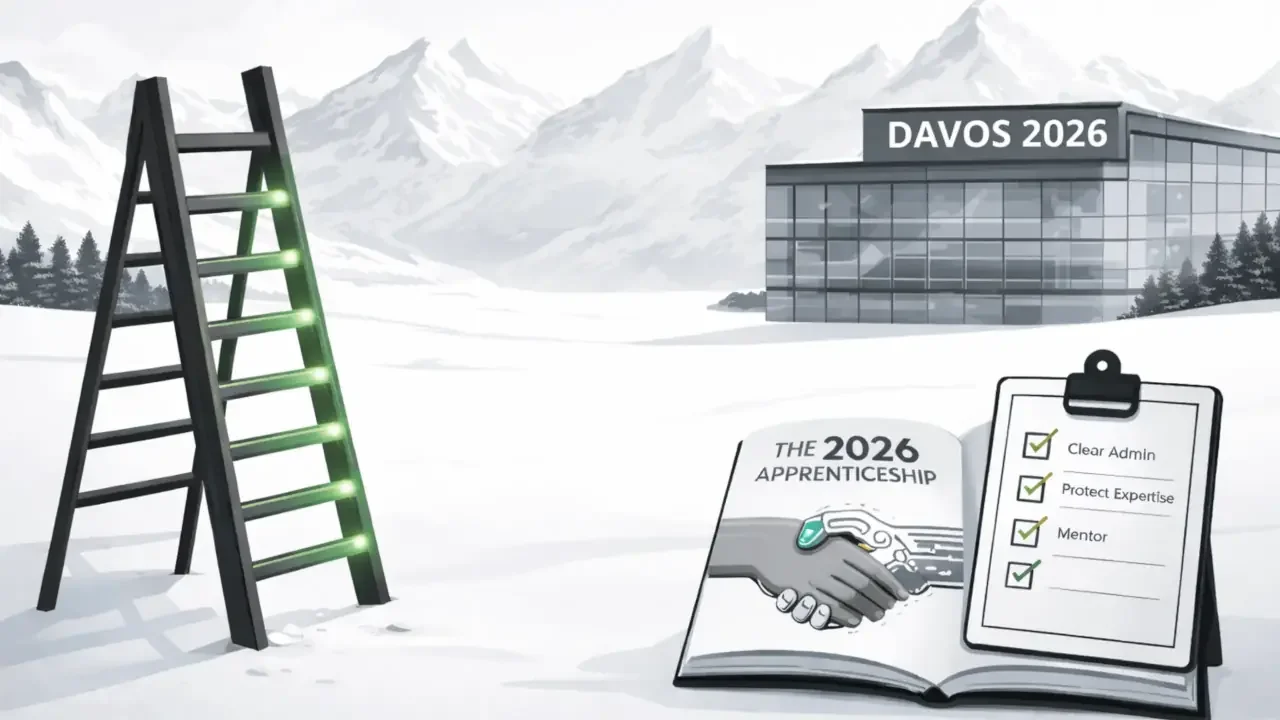
Why traditional creative apprenticeship is under pressure
For decades, apprenticeship in creative teams relied on exposure to the full process. Juniors sat in meetings, took messy briefs, produced rough drafts, and watched seniors edit their work. The learning lived in the gaps between what they delivered and what eventually went out the door.
As AI tools take over first passes and routine tasks, that gap narrows or disappears. Workflows become more compressed, and seniors interact with AI outputs rather than junior work. Without deliberate redesign, creative careers risk becoming top-heavy: a few senior minds directing a stack of tools, with no clear path for the next generation to build judgement.
What gets lost when AI handles the grunt work
On paper, removing grunt work looks like pure efficiency. In practice, it erases key learning stages.
Juniors lose chances to see how raw ideas evolve into final campaigns.
Teams stop articulating why certain creative choices are stronger than others.
Feedback becomes about prompting technique instead of underlying craft.
Over time, you can end up with people who know how to operate tools but struggle to explain why one solution is more effective, more human, or more on-brief than another.
Designing an intentional AI-era apprenticeship
Rebuilding apprenticeship in the AI era means putting structure around learning that used to be informal.
That can include:
Shadow rounds: Juniors review AI outputs and write what they would change before seeing the senior edit.
Deconstruction sessions: Teams walk through a finished piece of work and unpack the decisions behind it, including where AI helped and where it was overruled.
Practice briefs: Safe, simulated briefs where juniors handle the full flow, from prompt to presentation, with explicit feedback on both creative thinking and tool use.
The aim is not to slow down your team but to make sure people still see enough of the process to build judgement that lasts longer than any current model or interface.
If you want a quick way to understand how ready your team is for this shift, try our free Trust Pulse AI readiness diagnostic for creative teams.
Using AI to strengthen, not replace, apprenticeship
AI can actually support better apprenticeship if it is used to create more, not fewer, learning moments.
Leaders can:
Use AI to generate multiple options, then involve juniors in critiquing them.
Capture and document feedback patterns so newer team members can learn from real decisions, not just final assets.
Give juniors ownership of specific parts of the workflow (for example, prompt libraries or reference boards) where they can build both craft and operational skills.
Our SIGNAL AI readiness diagnostic helps you see where governance, skills, and workflows need strengthening before you scale AI.
When you treat AI as a tool that augments human development rather than bypasses it, you protect the long-term depth of your team’s talent while still gaining short-term efficiency.
This article was originally published by Tina Saul on LinkedIn.